Move-In Checklist for Landlords (Free)
A move-in checklist records the condition of every room on the day your tenant gets the keys, signed by both of you, so the deposit conversation at move-out is about facts instead of memory. This free template goes room by room, adds keys and meter readings, and belongs in the same folder as the signed copy of your free lease agreement template.
By LandlordTested editorial teamLast reviewed
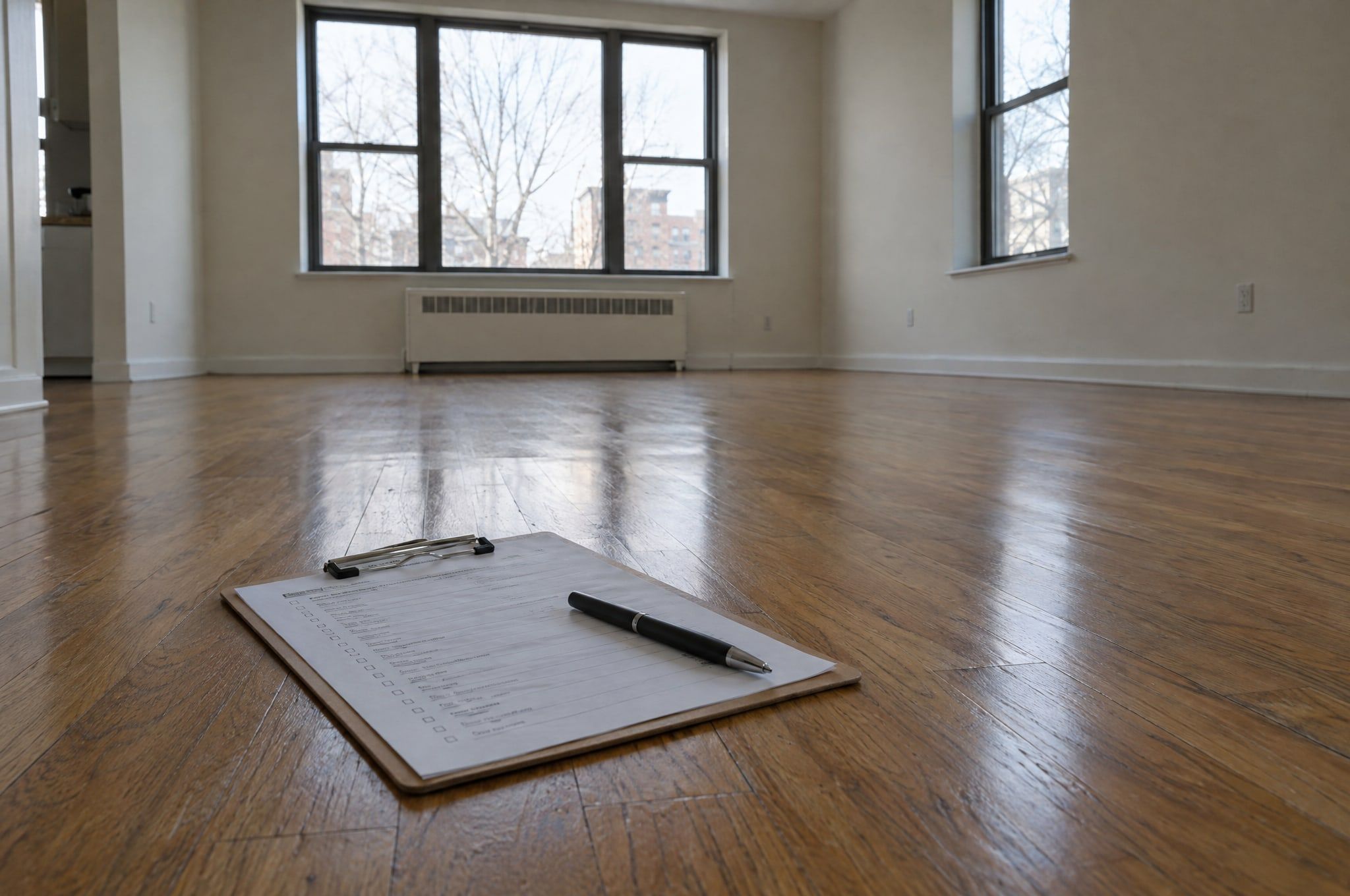
Move-In Checklist
Free to use and edit. To get a Word or Google Docs copy, print to PDF or copy the text into a new document.
Move-in condition checklist
Tenant name(s): ______________________________________________
Property address: ______________________________________________
Unit: __________ Move-in date: ______________ Inspection date: ______________
Inspection done by: [ ] Landlord and tenant together [ ] Landlord only [ ] Tenant only
Photos or video taken? [ ] Yes [ ] No Where they are stored: ______________________________
Condition key: N = new, G = good, F = fair (normal wear), P = poor, D = damaged or missing. Describe every scratch, stain, chip, hole or missing item in the Notes column, with its location and size.
Room-by-room condition
Entry and hallways
| Room | Item | Condition at move-in | Notes |
|---|---|---|---|
| Entry and hallways | Front door and lock | ||
| Doorbell | |||
| Walls | |||
| Ceiling | |||
| Floor or carpet | |||
| Light fixtures | |||
| Closet and doors | |||
| Outlets and switches |
Living room
| Room | Item | Condition at move-in | Notes |
|---|---|---|---|
| Living room | Walls | ||
| Ceiling | |||
| Floor or carpet | |||
| Windows and screens | |||
| Blinds or window coverings | |||
| Light fixtures and fans | |||
| Outlets and switches | |||
| Doors and closet |
Kitchen
| Room | Item | Condition at move-in | Notes |
|---|---|---|---|
| Kitchen | Walls and ceiling | ||
| Floor | |||
| Cabinets and drawers | |||
| Countertops | |||
| Sink and faucet | |||
| Garbage disposal | |||
| Refrigerator and freezer | |||
| Stove, oven and burners | |||
| Range hood or vent fan | |||
| Dishwasher | |||
| Microwave | |||
| Windows and screens | |||
| Light fixtures | |||
| Outlets (including GFCI) |
Dining area
| Room | Item | Condition at move-in | Notes |
|---|---|---|---|
| Dining area | Walls and ceiling | ||
| Floor | |||
| Windows and coverings | |||
| Light fixtures |
Bedroom 1
| Room | Item | Condition at move-in | Notes |
|---|---|---|---|
| Bedroom 1 | Walls and ceiling | ||
| Floor or carpet | |||
| Windows, screens and locks | |||
| Blinds or window coverings | |||
| Closet, doors and shelving | |||
| Light fixtures and fans | |||
| Outlets and switches | |||
| Smoke alarm |
Bedroom 2
| Room | Item | Condition at move-in | Notes |
|---|---|---|---|
| Bedroom 2 | Walls and ceiling | ||
| Floor or carpet | |||
| Windows, screens and locks | |||
| Blinds or window coverings | |||
| Closet, doors and shelving | |||
| Light fixtures and fans | |||
| Outlets and switches | |||
| Smoke alarm |
Bedroom 3
| Room | Item | Condition at move-in | Notes |
|---|---|---|---|
| Bedroom 3 | Walls and ceiling | ||
| Floor or carpet | |||
| Windows, screens and locks | |||
| Blinds or window coverings | |||
| Closet, doors and shelving | |||
| Light fixtures and fans | |||
| Outlets and switches | |||
| Smoke alarm |
Bathroom 1
| Room | Item | Condition at move-in | Notes |
|---|---|---|---|
| Bathroom 1 | Walls and ceiling | ||
| Floor | |||
| Toilet | |||
| Sink, faucet and drain | |||
| Tub or shower | |||
| Tile and caulking | |||
| Mirror and medicine cabinet | |||
| Towel bars and fixtures | |||
| Exhaust fan | |||
| Outlets (including GFCI) |
Bathroom 2
| Room | Item | Condition at move-in | Notes |
|---|---|---|---|
| Bathroom 2 | Walls and ceiling | ||
| Floor | |||
| Toilet | |||
| Sink, faucet and drain | |||
| Tub or shower | |||
| Tile and caulking | |||
| Mirror and medicine cabinet | |||
| Towel bars and fixtures | |||
| Exhaust fan | |||
| Outlets (including GFCI) |
Laundry and utility
| Room | Item | Condition at move-in | Notes |
|---|---|---|---|
| Laundry and utility | Washer | ||
| Dryer and vent | |||
| Water heater | |||
| Furnace or heating system | |||
| Air conditioning | |||
| Thermostat | |||
| Electrical panel |
Exterior, garage and yard
| Room | Item | Condition at move-in | Notes |
|---|---|---|---|
| Exterior, garage and yard | Garage or parking space | ||
| Garage door and opener | |||
| Patio, deck or balcony | |||
| Yard and lawn | |||
| Fences and gates | |||
| Mailbox and key | |||
| Exterior lights | |||
| Trash and recycling bins |
Safety
| Room | Item | Condition at move-in | Notes |
|---|---|---|---|
| Safety | Smoke alarms (tested) | ||
| Carbon monoxide alarms (tested) | |||
| Fire extinguisher | |||
| Door and window locks | |||
| Deadbolts |
Keys, remotes and access devices
| Item | Quantity given | Notes |
|---|---|---|
| Front door keys | ||
| Back or side door keys | ||
| Mailbox keys | ||
| Garage door remotes | ||
| Building fobs or access cards | ||
| Other: |
Meter readings at move-in (if the tenant pays utilities)
| Utility | Reading | Date |
|---|---|---|
| Electric | ||
| Gas | ||
| Water |
Items provided with the unit
______________________________________________
______________________________________________
Additional notes
______________________________________________
______________________________________________
Signatures
The tenant may add written notes about any condition not listed above within [NUMBER OF DAYS] days after move-in, or any longer period [STATE] law requires. Any additions must be signed by both parties.
By signing, both parties agree this checklist accurately describes the condition of the unit on the date shown. It will be compared with the unit’s condition at move-out. Normal wear and tear is not charged to the tenant.
Tenant signature: ______________________________ Date: ______________
Tenant signature: ______________________________ Date: ______________
Landlord or agent signature: ______________________________ Date: ______________
Copy given to tenant on: ______________
This template is general information, not legal advice. Check your state’s rules before using it.
On this page
How to fill in the move-in checklist
Do the inspection after the unit is cleaned and repaired and before the tenant moves any furniture in. An empty unit shows everything.
Header and condition key
Fill in the names on the lease, the address, unit, move-in date and inspection date. Tick who was present. If you take photos or video, write where they’re stored (a dated folder in cloud storage works).
Use the condition key consistently: N for new, G for good, F for fair or normal wear, P for poor, D for damaged or missing. A column of G’s tells a judge very little on its own, so the notes column is where the useful detail goes.
Room-by-room tables
Go room by room, left to right, and write specifics. “Carpet stained” is weak. “Living room carpet: 4-inch brown stain near the window, faded strip by the sliding door” will hold up. Note sizes, locations and counts (two nail holes above the bed, one cracked outlet cover).
Test things as you go. Run every faucet, flush every toilet, open every window, turn on each burner, run the dishwasher for a minute and press the test button on every smoke and carbon monoxide alarm. Write “tested” next to the alarms with the date.
Delete bedroom or bathroom tables you don’t need, or add rows for things the template doesn’t list, such as a ceiling fan remote or a basement dehumidifier.
Keys, remotes and meters
Count every key and device you hand over. At move-out, the same table tells you what’s missing. If the tenant pays utilities, record meter readings so the transfer date is clear.
Signatures and the added-notes window
Both of you sign and date it, and the tenant gets a copy the same day. Fill in the number of days the tenant has to add notes (many landlords allow 3 to 7) and stick to it.
Photos and video to go with the checklist
The checklist and the photos work together. Shoot a slow video walk-through of the whole unit first, with the date visible or spoken at the start, then take still photos of each room from the doorway and close-ups of every item you marked F, P or D. Open the oven, the fridge and the dishwasher on camera. Photograph the inside of closets and cabinets, the floors in bright light, and the walls near outlets and doors, where scuffs collect. Then write the folder name on the checklist so you can find it at move-out.
State rules for move-in condition records
Most states don’t require a checklist, but several tie your right to keep a deposit to one:
- Washington: a written move-in condition checklist is required to collect a deposit at all.
- Georgia: you must give the tenant a move-in list of existing damage, signed by the tenant, and inspect within 3 business days after move-out.
- Massachusetts: a signed statement of condition is due within 10 days of the tenancy starting. Mistakes in Massachusetts deposit handling can mean treble damages.
- Michigan: move-in and move-out inventory checklists are required under the Security Deposits Act.
- California: under AB 2801, dated photos at move-in (from July 1, 2025) and move-out (from April 1, 2025) are required to support deposit deductions.
- Kentucky and Tennessee: in localities and counties that adopted the Uniform Residential Landlord and Tenant Act, move-in and move-out inspections or lists are required.
- New York and Maryland: New York landlords must offer a pre-move-in inspection, and Maryland tenants may request one.
Mistakes to avoid
- Filling it in from memory. Do it in the unit, on the day.
- Vague notes. “Some wear” can’t be compared to anything at move-out.
- No tenant signature. In Georgia and Washington, an unsigned or missing list can cost you the right to deduct.
- Losing the photos. Name the folder with the address and date, and back it up.
- Not giving the tenant a copy. A checklist the tenant never saw is hard to rely on later.
Questions landlords ask
The questions we get most, each answered in a paragraph.
Is a move-in checklist required by law?
In some states, yes. Washington requires a written move-in condition checklist before a landlord can collect a deposit. Georgia requires a move-in damage list signed by the tenant, Massachusetts requires a signed statement of condition within 10 days, and Michigan requires move-in and move-out inventory checklists. Even where it's optional, it's the best evidence you'll have in a deposit dispute.
Should the tenant be there for the move-in inspection?
Ideally, yes. Walking the unit together means you agree on the condition on the spot and both sign the same page. If that isn't possible, do the inspection yourself, give the tenant a copy on move-in day, and let them add written notes within a set number of days.
Do I need photos as well as a checklist?
Take them. In California, dated photos at move-in have been required since July 1, 2025 to support deposit deductions, and photos help everywhere else too. Shoot each room from the doorway, then close-ups of anything already damaged, and store them where you can find them in two years.
What if the tenant finds damage after they move in?
That's what the added-notes window on the form is for. Have the tenant write it down, date it and sign it, then sign it yourself. If you disagree about something, note both views rather than leaving it off. A dated record of a disagreement still beats no record.
How long should I keep a move-in checklist?
Keep it for the whole tenancy and until the deposit is settled and any dispute period has passed. Most landlords keep it with the lease for several years. It's also useful for depreciation and repair records when you replace carpet or appliances.