Landlord Insurance in Massachusetts: Costs, Requirements & Best Providers
Massachusetts is a below-average state for property insurance. The homeowners benchmark is $1,645 a year, and landlord policies usually run 15-25% higher. The averages hide two hard cases: Cape Cod and the Islands, where many owners end up on the state FAIR Plan, and older triple-deckers, where wiring, heat and lead paint drive underwriting. Get a landlord insurance quote with those details in hand.
By LandlordTested editorial teamPrices checked
We may earn a commission if you sign up through links on this page. It never changes a ranking. How we make money.
What landlords pay in Massachusetts
- Homeowners benchmark
- $1,645 a yearAbout $137 a month; 34% below the $2,490 national average.
- Estimated landlord policy
- $1,900-$2,050 a yearLandlord (DP-3) cover typically runs 15-25% above homeowners cover on the same building. Your quote will differ.
- Main hazards
- Nor'easter/winter storm, Ice dams/freeze, Hurricane, Coastal flood, Wind
- Not included
- Flood and earthquakeBoth need separate policies (NFIP or private flood; earthquake endorsement or policy).
Source: NerdWallet, 2026 homeowners (HO-3) median, $400,000 dwelling cover
Landlord insurance providers in Massachusetts
Both write landlord policies in all 50 states and quote online. Neither publishes prices, so the only way to know your premium is to get a quote for your address.
- 1
Steadily
Our pickSingle-family and 2-4 unit rentals, including vacant and short-term.
8.5/10 provisionalPrice
Quote-based
Pros, cons and who should skip itHide details
Good
- Covers all 50 states.
- Fast online quotes.
- Writes vacant and renovation properties too.
Watch out
- Mixed claim experiences, including wear-and-tear denials.
- Underwritten through a carrier some lenders have queried.
- Flood needs a separate policy.
Skip it if
Anyone who wants a local agent sitting across the desk.
- 2
Obie
Investors with several properties; portfolio policies available.
8.1/10 provisionalPrice
Quote-based
Pros, cons and who should skip itHide details
Good
- All 50 states plus DC.
- Portfolio (blanket) policies for several rentals.
- Covers short-term rentals and renovations.
Watch out
- Claims run through third-party administrators.
- Some reports of non-renewal after claims.
- Support is mostly email.
Skip it if
Landlords who want claims handled by the company they bought from.
Prices checked Oct 18, 2026. Scores are provisional until our account tests are done.
Want to see how Massachusetts compares? We keep a table of landlord insurance rates by state, with the method behind every figure.
On this page
Why Massachusetts looks cheap, and where it isn’t
At $1,645, Massachusetts sits about a third below the national benchmark. A landlord (DP-3) policy on the same $400,000 house would typically run about $1,890 to $2,060. For a single-family in Worcester or a condo in Springfield, quotes often land close to that. Two parts of the market behave very differently.
Cape Cod, the Islands and the FAIR Plan
Many private insurers limit or stop writing near the coast on the Cape, Martha’s Vineyard and Nantucket. The Massachusetts Property Insurance Underwriting Association, the state’s FAIR Plan, insures a large share of those homes. Coastal policies, from the FAIR Plan or private carriers, commonly carry a separate wind or hurricane deductible set as a percentage of the dwelling limit, often 1% to 5%. On a $500,000 dwelling limit, 2% is $10,000.
Flood is excluded from landlord policies, and storm surge counts as flood. Lenders require flood coverage in FEMA special flood hazard areas, through the National Flood Insurance Program or a private insurer. If you rent the Cape house by the week in summer, ask for short-term rental coverage; Steadily and Obie both write it.
Triple-deckers and older multifamily
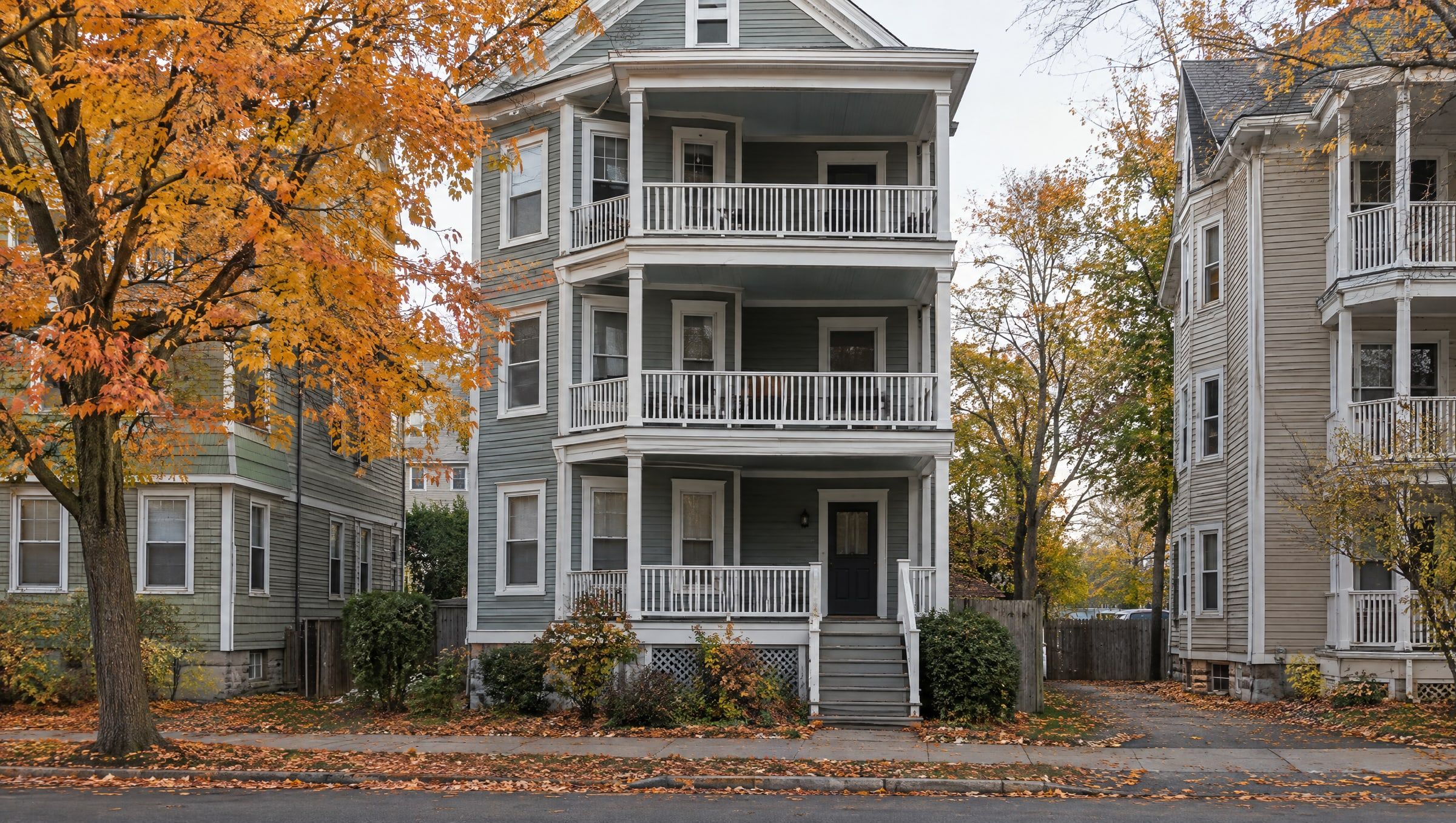
Boston, Worcester, Lowell, Fall River and New Bedford are full of wood-frame two- and three-family houses built a century ago. Underwriters ask about:
- Wiring and panel. Knob-and-tube or an old fuse box can mean a decline.
- Heating. Boiler age, oil tank age and any space heaters.
- Porches and stairs. Rear porches on triple-deckers are a liability concern; keep them sound and up to code.
- Roof age. Ice dams make roof condition matter more here.
The record snow of February 2015 brought a wave of ice dam claims in greater Boston. Proper attic insulation and ventilation, plus ice and water shield at the eaves, prevent most of them.
Lead paint liability
Massachusetts lead law makes owners of pre-1978 housing strictly liable if a child under 6 is poisoned in a home that hasn’t been deleaded. Many landlord policies exclude or limit lead claims. Ask each insurer exactly how lead is handled, and keep deleading or interim control paperwork on file.
What lenders require
Lenders want dwelling coverage at least equal to the loan or rebuild cost, the lender named as mortgagee, and flood coverage in a mapped zone. Investment lenders often add loss-of-rent coverage.
Ways to pay less
- Upgrade electrical and heating systems in older buildings before you shop.
- Delead or get interim control, which also helps with insurability.
- Insulate and ventilate attics to prevent ice dams.
- On the coast, add shutters or impact-rated openings and ask about wind credits.
Massachusetts deposit rules and your risk
Massachusetts caps the deposit at one month’s rent, though you may also collect first and last month’s rent and a lock-change fee. The rules are strict: a receipt naming the bank and account within 30 days, a signed statement of condition within 10 days of the start of the tenancy, a separate interest-bearing account in a Massachusetts bank, annual interest at 5% or the actual bank rate if lower, and return within 30 days with an itemized list signed under penalty of perjury (Mass. Gen. Laws ch. 186, § 15B). Violations can mean treble damages plus attorney fees. Some small landlords skip the deposit and take last month’s rent instead, which shifts more turnover risk onto their own reserves.
Questions landlords ask
The questions we get most, each answered in a paragraph.
How much is landlord insurance in Massachusetts?
The 2026 NerdWallet benchmark for a Massachusetts homeowners policy on a $400,000 house is $1,645 a year, about 34% under the $2,490 national average. Landlord policies usually cost 15-25% more. Coastal properties on Cape Cod and the Islands often price higher, and older multifamily buildings may too. A quote for the address is the only real number.
What is the Massachusetts FAIR Plan?
It's the Massachusetts Property Insurance Underwriting Association, the backstop insurer for properties the private market won't write. It insures a large share of homes on Cape Cod and the Islands, where many private insurers limit coastal coverage. Its policies typically carry a wind deductible on coastal properties.
Does landlord insurance cover lead paint liability in Massachusetts?
Ask carefully. Massachusetts lead law makes owners of pre-1978 housing strictly liable for lead poisoning of children under 6 when the home hasn't been deleaded, and many policies exclude or limit lead claims. A deleading or letter of interim control can help with both liability and insurability.