Landlord Insurance in New Hampshire: Costs, Requirements & Best Providers
Landlord insurance in New Hampshire costs less than the national average. The homeowners benchmark is $1,500 a year against $2,490 nationally, and a landlord (DP-3) policy typically runs about $1,700 to $1,900. Winter does most of the damage here: ice dams, burst pipes and roof snow loads. Age of the building and its heating system matter more than location, so get a landlord insurance quote with those details ready.
By LandlordTested editorial teamPrices checked
We may earn a commission if you sign up through links on this page. It never changes a ranking. How we make money.
What landlords pay in New Hampshire
- Homeowners benchmark
- $1,500 a yearAbout $125 a month; 40% below the $2,490 national average.
- Estimated landlord policy
- $1,700-$1,900 a yearLandlord (DP-3) cover typically runs 15-25% above homeowners cover on the same building. Your quote will differ.
- Main hazards
- Winter storm/ice, Freeze, Nor'easter, Flood, Wind
- Not included
- Flood and earthquakeBoth need separate policies (NFIP or private flood; earthquake endorsement or policy).
Source: NerdWallet, 2026 homeowners (HO-3) median, $400,000 dwelling cover
Landlord insurance providers in New Hampshire
Both write landlord policies in all 50 states and quote online. Neither publishes prices, so the only way to know your premium is to get a quote for your address.
- 1
Steadily
Our pickSingle-family and 2-4 unit rentals, including vacant and short-term.
8.5/10 provisionalPrice
Quote-based
Pros, cons and who should skip itHide details
Good
- Covers all 50 states.
- Fast online quotes.
- Writes vacant and renovation properties too.
Watch out
- Mixed claim experiences, including wear-and-tear denials.
- Underwritten through a carrier some lenders have queried.
- Flood needs a separate policy.
Skip it if
Anyone who wants a local agent sitting across the desk.
- 2
Obie
Investors with several properties; portfolio policies available.
8.1/10 provisionalPrice
Quote-based
Pros, cons and who should skip itHide details
Good
- All 50 states plus DC.
- Portfolio (blanket) policies for several rentals.
- Covers short-term rentals and renovations.
Watch out
- Claims run through third-party administrators.
- Some reports of non-renewal after claims.
- Support is mostly email.
Skip it if
Landlords who want claims handled by the company they bought from.
Prices checked Oct 18, 2026. Scores are provisional until our account tests are done.
Want to see how New Hampshire compares? We keep a table of landlord insurance rates by state, with the method behind every figure.
On this page
Winter drives New Hampshire rental claims
The big claims here come with the cold. Snow piles up on a roof, heat escaping through the attic melts it, the water refreezes at the eaves and backs up under the shingles. The ceiling below takes the damage. Pipes in exterior walls and unheated basements freeze and split, and the water runs until someone notices, which in a rental can be days.
Nor’easters add wind damage, downed trees and long power outages that set up the frozen-pipe claim. A landlord policy generally covers sudden water damage and wind, but most dwelling policies exclude freeze damage when a building wasn’t kept heated, and coverage tightens once a unit has been vacant for a set period (often 60 days).
Older buildings get extra scrutiny
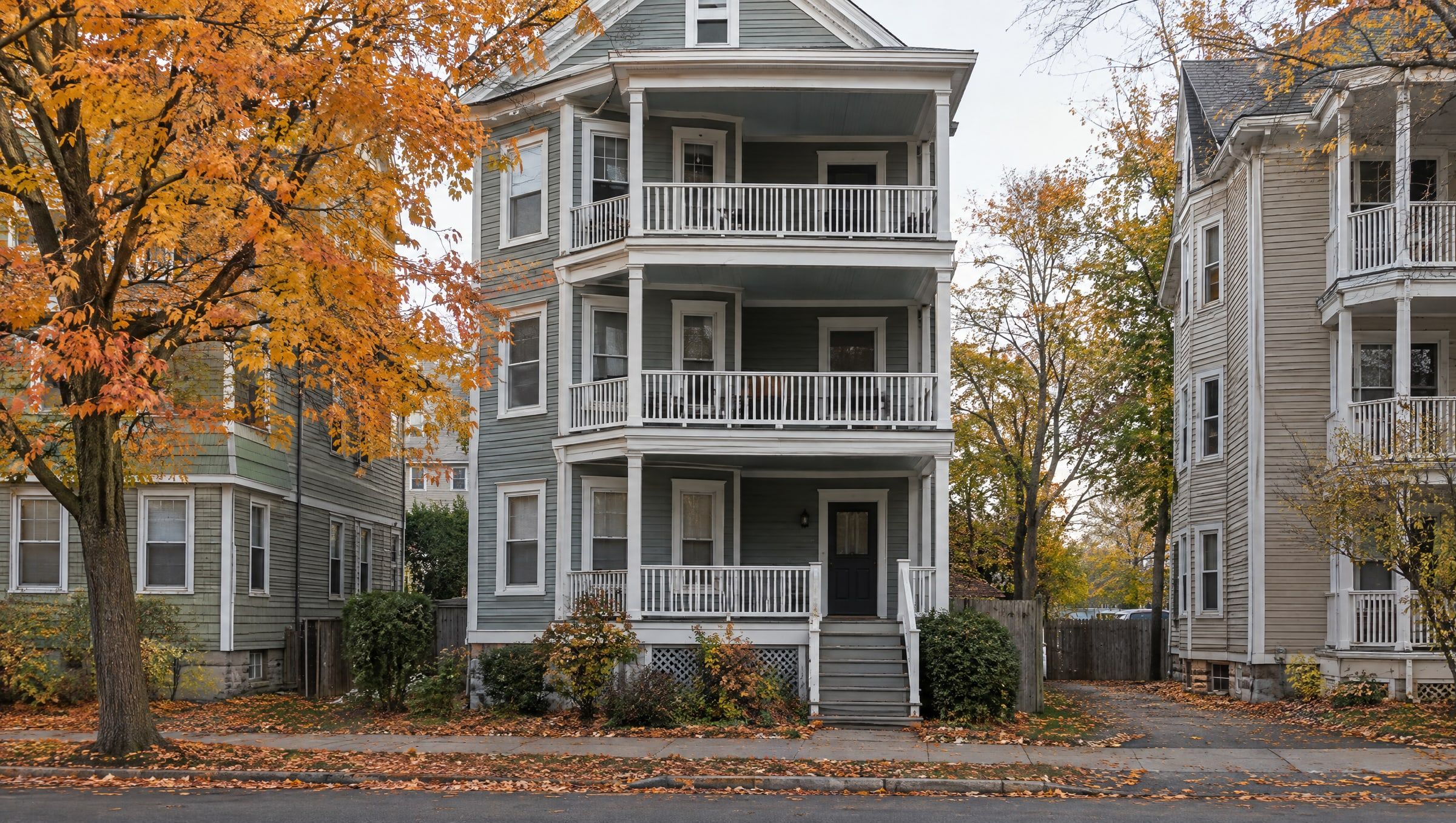
New Hampshire has a lot of older rental housing: mill-era multifamily in Manchester and Nashua, converted farmhouses, and multi-unit Victorians in Concord, Dover and Keene. Insurers ask about:
- Wiring. Knob-and-tube wiring and fuse boxes can lead to a decline or a surcharge.
- Heating. Boiler age, oil tank age and location, and any wood or pellet stoves.
- Roof and plumbing age. Galvanized supply lines are a red flag for water claims.
Updating one of these before you shop can widen the list of insurers willing to quote.
Flood is a river problem, not only a coastal one
The Seacoast around Hampton and Portsmouth has storm surge exposure, but most New Hampshire flood claims come from rivers rising with spring snowmelt and heavy rain. Landlord policies exclude flood. Coverage comes through the National Flood Insurance Program or a private flood insurer, and NFIP policies usually take 30 days to start.
What lenders require
Expect your lender to require a landlord (dwelling) policy with the lender named as mortgagee and dwelling coverage at least equal to the loan or the rebuild cost. Flood insurance is required on federally backed loans in a mapped high-risk zone. Investor lenders often require loss-of-rent coverage too.
Lowering the premium
- Air-seal and insulate the attic to stop ice dams at the source, and keep the receipts.
- Replace an old oil tank or move it out of the ground before the insurer asks.
- Install low-temperature and water leak sensors in units, basements and utility rooms.
- Update knob-and-tube wiring or fuse panels, which opens up more carriers.
- Raise your deductible to $2,500 if a winter claim wouldn’t wipe out your reserves.
Deposit and notice rules that shape your risk
Under N.H. Rev. Stat. § 540-A:6-8, a deposit is capped at one month’s rent or $100, whichever is greater, and you must return it within 30 days with an itemized list. The state also requires interest on deposits in the same statute. Since most residential tenancies need good cause to end (N.H. Rev. Stat. § 540:2), you can’t count on non-renewal to remove a careless tenant, which makes screening and liability coverage more important.
Questions landlords ask
The questions we get most, each answered in a paragraph.
How much is landlord insurance in New Hampshire?
New Hampshire's homeowners benchmark is $1,500 a year (NerdWallet 2026, $400,000 dwelling). Landlord policies typically run 15% to 25% higher, or about $1,700 to $1,900. A 1920s triple-decker in Manchester with an older heating system can price well above a newer single-family rental in Bedford, so the real number comes from a quote.
Are ice dams covered by landlord insurance?
Water that backs up under the shingles from an ice dam and damages ceilings and walls is generally covered on a DP-3 policy. The cost of removing the ice and fixing poor attic insulation or ventilation usually isn't, because that's maintenance. Repeated ice dam claims can lead to a non-renewal, so fixing the cause pays off.
Do insurers care about oil tanks on New Hampshire rentals?
Many do. Insurers commonly ask the age and location of heating oil tanks, and older or underground tanks can lead to a decline or a requirement to replace them. A leaking tank can mean an expensive cleanup that many policies limit or exclude. Have the install date ready when you ask for quotes.